It is a truth long acknowledged but perhaps still contentious that history is remembered from the victor’s perspective. We remember the past as it was interpreted, constructed, and recounted. Yet, what if that history was incomplete? When past events are distilled into books, portrayed in movies, or relegated to dusty archives, the voices of the vanquished are often forgotten. To unveil the multifaceted perspectives and experiences of those who were left voiceless for far too long, Heather Morrison decided to create the Canadian Museum of Women’s History (CMWH). This project is not only long overdue but also a testament to hope, as progress and change remain attainable.

Treasurer & Founder of CMWH
The Inception of the CMWH
A few years ago, Heather Morrison worked as a counsellor at the Sexual Assault Centre in Kingston. Over the decade she spent there, she supported teenagers who were experiencing or had survived sexual violence. Yet, despite her best efforts, she struggled to find a space where she could show the young women she met, that they were not alone and that their pain was not incidental but part of a broader, historical pattern. At that moment, she registered that women’s suffering, just like their contributions, had been neglected by history, either ignored or simply left to erode with time.
Propelled by that sad realization, she endeavoured to create an environment where the story of each woman, “her story,” was at the forefront of historical analysis rather than the sidelines. With this vision in mind, Morrison and her colleagues, Mary Clancy and Arlene Hache, alongside various collaborators, vowed to build the first Canadian Museum of Women’s History. You may be wondering, like I was, “Wait a second. Don’t we already have a museum focused on women? Surely, that must exist in Canada.”

Unfortunately, that assumption would be erroneous because although sixty countries boast such a museum worldwide, Canada is not among them. There is a Women’s Art Museum in Edmonton. But it’s not focused on the historical experiences of women, unlike the ones in the Netherlands, Germany, and South Africa. Currently, Canada’s inclusion of women in history tends to be temporary. Exhibits like the 2017 “Nice Women Don’t Want the Vote” display, created by the Manitoba Museum. The purpose was to commemorate the centennial anniversary of women’s voting rights in the province (Canadian Museum of History, 2017). However, although laudable and appreciated, transient exhibitions cannot meaningfully capture the breadth of women’s contributions to history, nor the variety found in their lived experiences. Therein lies one of the key purposes of the CMWH: to emphasize that women were and are key historical players, rather than secondary characters.


An Ongoing Mission to Transform Historical Education
To this end, the CMWH’s objectives can be viewed as threefold: to educate, to decolonize, and to democratize history. Through her master’s degree in education and ongoing doctoral studies in public pedagogy, Morrison approaches history in an innovative way. Rather than viewing the subject as stagnant in time, she sees “history as a living document” (Heather Morrison, 2024).
This perspective transforms history into a field that can be constantly re-examined, which enables historians and educators to broaden the viewpoints considered. This lens also makes museums part of a greater concert of educational efforts in public pedagogy. Museums like the CMWH are places where anyone can learn about history and counter possible lacunae in their existing knowledge. As such, the CMWH illustrates how public pedagogy can place women’s voices and experiences at the forefront of Canadian history. Rather than its edges, as an afterthought.
Decolonizing and Deconstructing History
Additionally, by addressing gender inclusivity concerns in historical narratives, the CMWH can decolonize history and support Indigenous-led reconciliation efforts. While characterized by remarkable advancements in women’s voting and reproductive rights, Canadian history is also fraught with colonialism (Hele, 2023). As French and English settlers abounded, they reacted poorly to the Indigenous peoples who had already prospered in these lands since time immemorial (Hele, 2023). From displacement and residential schools to abject discrimination and forced assimilation, Indigenous communities saw the erosion of their cultures, traditions, and languages (Hele, 2023).

Today, museums like the CMWH have the opportunity to address the repercussions of colonialism and its enduring legacy in the cultural heritage sector. The CMWH can create a more inclusive and representative future by placing Indigenous customs, stories, and reconciliation efforts at the heart of history. This begins by adopting meaningful Indigenous participation in decision-making boards, working with local Indigenous communities to care for artifacts, and so forth (Shoenberger, 2023). In other words, the CMWH seeks to decolonize history and provide a collaborative forum where one can learn about Indigenous women’s experiences before Confederation and address the legacy of colonialism that ensued.
The Quest for Democracy
The pedagogical objectives of the CMWH and its efforts to decolonize history also align with the broader concept of democracy. Despite being a liberal democracy with an enforceable Charter of Rights and Freedoms, Canada’s historical omissions tarnish its democratic pursuit. As a result, the CMWH seeks to respond to the exclusion of women’s and Indigenous voices from formal historical narratives. This includes fostering a more inclusive dialogue about women’s safety in Canada and advocating for their increased protection by considering the example of other nations. To democratize history is thus to recognize that democracy is grounded in equality and to use museums as social agents of change that amplify all voices, regardless of their gender, race, or status.


As the Final Report of the National Inquiry into Missing and Murdered Indigenous Women and Girls illustrates, Indigenous sisters, wives, mothers, and daughters are facing staggering rates of violence (Native Hope, 2024). In both Canada and the United States, Indigenous women face murder rates ten times higher and violence rates four times higher than non-Indigenous women (Native Hope, 2024). In Canada, about 16% of all female homicide victims and 11% of missing women are Indigenous, yet Indigenous people only consist of 4.3% of the general population (Assembly of First Nations, 2024).
Accordingly, given that women as a whole and Indigenous women and girls specifically continue to experience gender-based violence, it is essential for history to broaden its scope of analysis. This is precisely what the CMWH aims to accomplish by acknowledging and striving toward addressing the ongoing difficulties and inequalities that women continue to face. With the CMWH, Canada can emulate the example of its European predecessors and build a museum where women’s voices are amplified, and historical truths are comprehensively examined rather than discarded. After all, why should history solely focus on the predictable story of the victors, when the strenuous tale of the underdog is so much more compelling?
To learn more about the Canadian Museum of Women’s History, check out their official website and give them a follow on their Facebook page.
Written by: Thanina Maouche
Vous pouvez lire la version anglaise de “Le musée canadien de l’histoire des femmes: Amplifier leaur histoires, leurs héritages, leurs voix”.
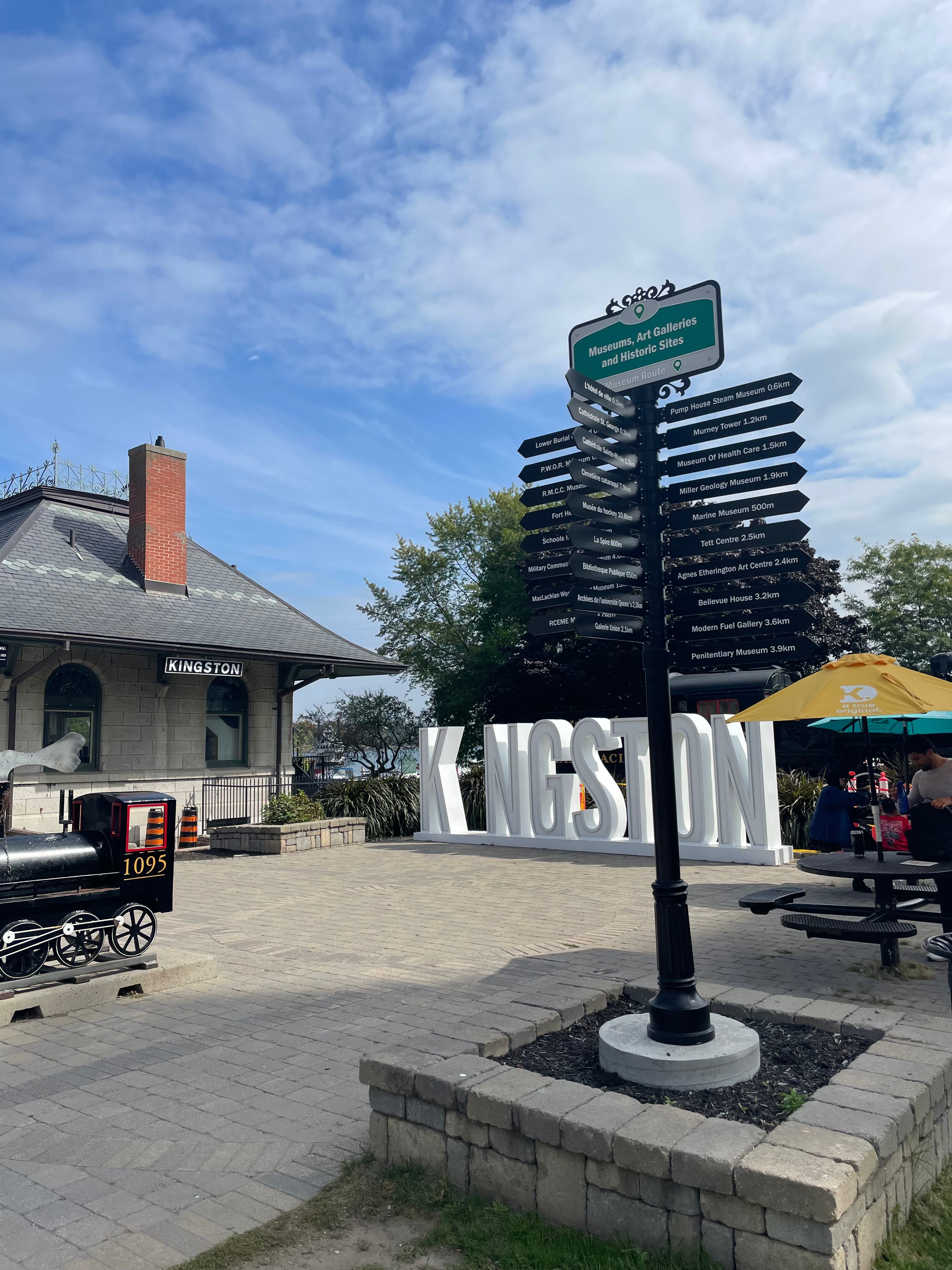
Learn more about the Museums, Art Galleries and Historic Sites of Kingston & the Area by exploring the spaces around you!
Bibliography
Canadian Museum of History. (2017). “Nice Women Don’t Want the Vote.”
Heler, Karl. (2023). The Canadian Encyclopedia. “Colonialism in Canada.”
Native Hope. (2024). “Missing and Murdered Indigenous Women (MMIW).”
Shoenberger, Elisa. (2023). MuseumNext. “What Does it Mean to Decolonize a Museum.”
Images
Canadian Museum of Women’s History. (2022). CMHW Founding Board.
Sexual Assault Centre Kingston. (2024). Facebook page.
Wikipedia. (2024). “Museum van de Vrouw, Echt.”
Wikipedia. (2024). “Bonn Women’s Museum.”
Be the Truth and Reconciliation you Want to See in Canada. (2024). Facebook page for CMHW