As lights flicker in the moonlight to reflect on the frozen water of the Rideau Canal, passersby can see the motion of the water under an otherwise tranquil scene. When winter fades away into spring, this canal awakens in gentle ripples on which the sun sets and rises every day. The Rideau Canal remains constant throughout the seasons, though its surroundings oscillate from healthy green foliage to falling leaves and snow. Today, it’s recognized by many Ontarians as a great ice-skating rink or a romantic location for a first date. However, just like its length of 202 kilometers and ability to join the Ottawa River with the Kingston Cataraqui River and Lake Ontario, this canal’s history is lengthier and more compelling than what may appear at first glance.

The Construction Process of the Rideau Canal
The Rideau Canal was built between 1826 and 1832 using the innovative strategy of a “slackwater system” (Rideau Canal, 2024). Though many may not be aware of this technology, it enabled construction workers and engineers to connect lakes and rivers across North America. This project was unprecedented. Especially in its scale, and required contending with kilometres of untouched forests, wetlands, and rocky terrain (Rideau Canal, 2024). The communities surrounding this area were underpopulated, consisting of various small groups of settlers. Thus, the construction had to overcome strenuous territorial difficulties and flood a 202 kilometres-long pathway with water. All while ensuring it remained within the confines of water dams and was of a navigable depth (Rideau Canal, 2024). To conceptualize the difficulty of this task, imagine trying to simultaneously create and fill a massive bathtub with enough water for a ship to safely pass through!

The Purpose Behind The Calculated Madness
Though daunting, this project was incredibly successful. Becoming one of the engineering marvels of the nineteenth century and a key national historical site since 1925 (Government of Canada, n.d.). This waterway is not only structurally impressive but also impeccably preserved, thereby attesting to its ingenious design. Yet, you might be wondering, what purpose did it intend to serve? Well, this waterway held both an economical and a military purpose. Not only could this canal facilitate the commercial transportation of goods and the movement of people, but it could also establish a reliable military supply line (Government of Canada, n.d.).
This was especially important following the War of 1812 (Government of Canada, n.d.). Although Americans’ historical memory may wish to forget that fact, Canadians decidedly won that war. Yet, this conflict exacerbated Canada’s tenuous relationship with the United States at the time and highlighted its inadequate naval capacity. In light of this, Canada wished to ensure that its ships and military could travel in a safe route and an alternative to the St. Lawrence River through which they could, if need be, defend the country (Gouvernement du Canada, 2022).
The Workers Behind the Scenes
Given Canada’s objective to improve its naval strength and the military purpose of this canal, the best person to lead this project would need to possess a keen knowledge of defence and innovation. Lieutenant-Colonel John By proved to be precisely the man needed. A military engineer who was knowledgeable in both domains (Gouvernement du Canada, 2022). The Colonel collaborated with the Royal Engineers to design an engineering plan and divided the Rideau into twenty-three sections (Rideau Canal, 2024).
This cooperation transformed the daunting task before them, into an organized operation. Independent contractors worked on their section under the supervision of government engineers (Watson, 2023). Under this guidance and leadership, thousands of workers, predominantly Irish immigrants and French Canadians, started working by cleaning forest land, excavating rocks, and building water dams (Government of Canada, n.d.). From general labourers to stone masons, they all worked tirelessly in various construction camps to build this canal.

Yet, the circumstances surrounding their labour were often less than ideal. French-Canadian workmen were familiar with arduous conditions in timber camps and sought work following a downturn in the timber trade (Watson, 2023). Similarly, many new Irish immigrants were poverty-stricken and eager for work following the decline of the textile industry in Ireland (Watson, 2023). Given the high labour demand, sharing that these men were met with a difficult work environment would be an understatement.
These labourers encountered difficult temperatures, faced injury and disease, and even succumbed to death (Government of Canada, n.d.). The dangerous nature of the work resulted in numerous workmen drowning, falling from rocks, or dying due to black powder explosions (Watson, 2023). They worked fourteen hours a day, but were only allowed to rest one day of the week. Sleeping in “shanties” that conferred neither privacy nor comfort (Watson, 2023).

These already physically difficult working conditions were further exacerbated by the unique conditions of malaria outbreaks within the Great Lakes region. Southern Ontario in the late 1800s was ravaged by endemic malaria. The disease killed workers and their families alike throughout the century. Public and medical officials believed that poor air quality caused by stagnant water or the decomposition of vegetation in swamps was to blame for malaria (Bradburn, 2021). However, we now know that mosquitos carrying the “Plasmodium vivax” variant were to blame (Bradburn, 2021). Given the constricted living quarters and arduous working conditions, mosquitos were able to bite one person after the other and spread the disease rapidly. As such, many labourers and officials contracted the disease. More than 500 died shortly after, leading to the building of cemeteries near all workstations (Rideau Canal, 2024).
From Memory to the Contemporary
Although the Rideau Canal was intended to be a military supply route, it still acted as a useful military deterrent for any attacks. In practice, this canal has served many roles. Ranging from a travel way for newly arrived immigrants and a commercial route for merchants. To a recreational waterway for tourists and couples alike (Gouvernement du Canada, 2022). However, although there is little recorded information about the impact of this Canal on local Indigenous communities, its construction undoubtedly altered the landscape. This change affected practices like traditional hunting, fishing, travelling, trading, and even gathering spaces for Indigenous Peoples (Rideau Canal, 2024). Thus, while transformative and a massive undertaking, the construction of this Canal also had repercussions on many different groups and their lives.
Today, envisioning Ottawa and Kingston without the canal is akin to imagining Toronto without the CN Tower: simply inconceivable. The Rideau has transported countless individuals, facilitated the trade of many goods for local businesses (Rideau Canal, 2024). Ultimately, the Rideau Canal serves as a reminder that the waterway on which boats travel or that citizens leisurely skate on conveys the lives and hardships of the men and women who contributed to building the country in which we are lucky to reside today.
Written by: Thanina Maouche
Vous pouvez lire la version anglaise de Le canal Rideau: Un récit témoignant de l’ambition et de la ténacité canadienne
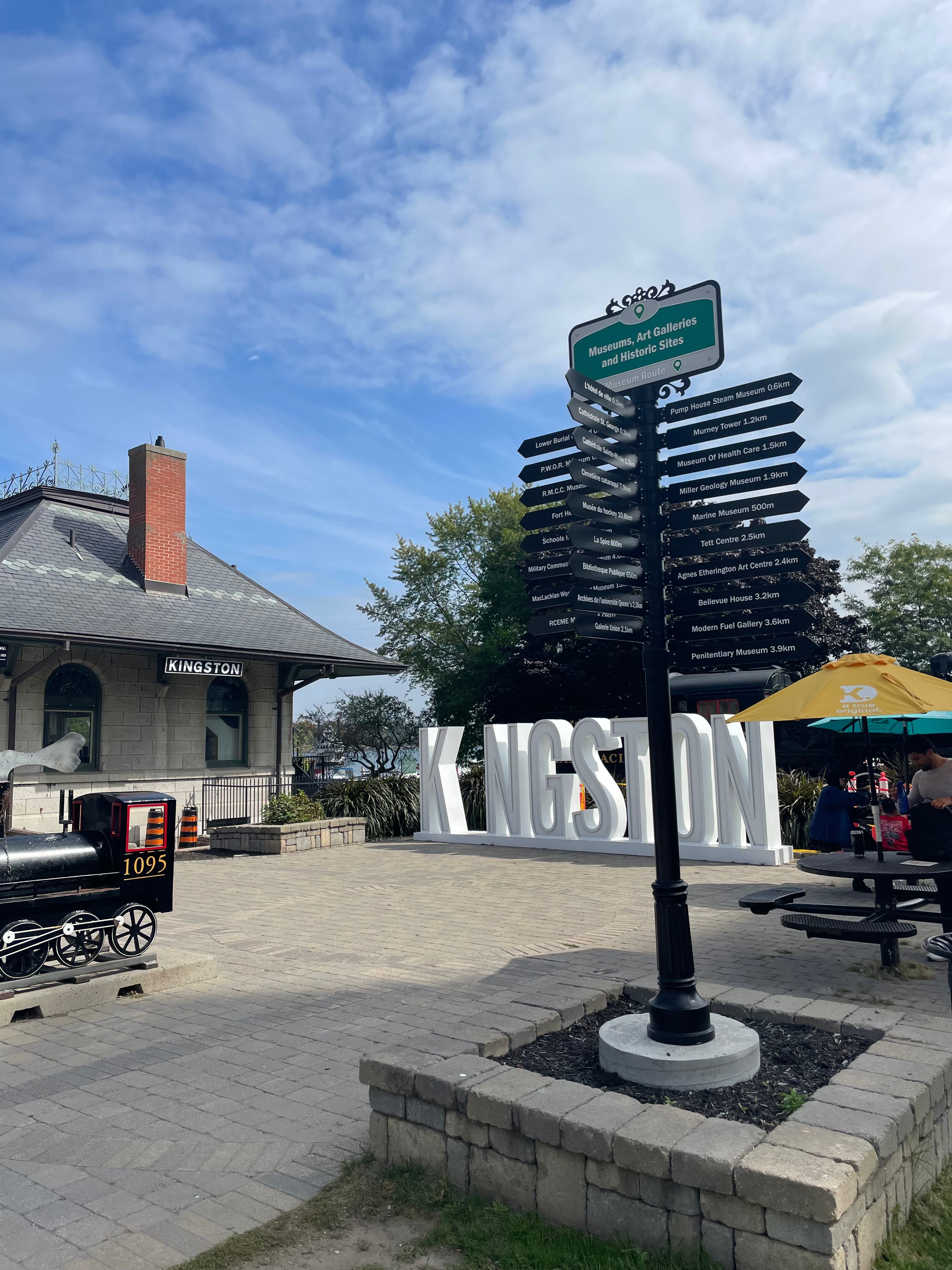
If you would like to learn more about the Museums, Art Galleries and Historic Sites of Kingston and the Area start by exploring the spaces around you!
Bibliography
Gouvernement du Canada. (2022). Culture et Histoire: Lieu Historique National duCanal-Rideau
Rideau Canal National Historic Site. (2024). History of the Rideau Canal.
Watson, Ken. (2023). Human History of the Rideau. Rideau Canal National Historic Site of Canada.